Edge-Enabled Identity & Access Management for IoT
Cloud-centric IAM makes every IoT access decision cross the internet: credentials travel over the WAN, a round-trip can take hundreds of milliseconds, and cached identity data at the edge silently goes stale.
Why the edge
IoT devices are constrained, long-lived and often insecure by default. When every authorization decision has to go to the cloud, credentials and telemetry cross the public internet just to be checked. For an ICU monitor or a door lock, that round-trip is also a window of failure.
EIAM moves identity and access decisions onto an edge node next to the devices. The cloud stays the authoritative registry.
Three tiers
We built three cooperating tiers:
- Cloud IAM. A FastAPI service backed by
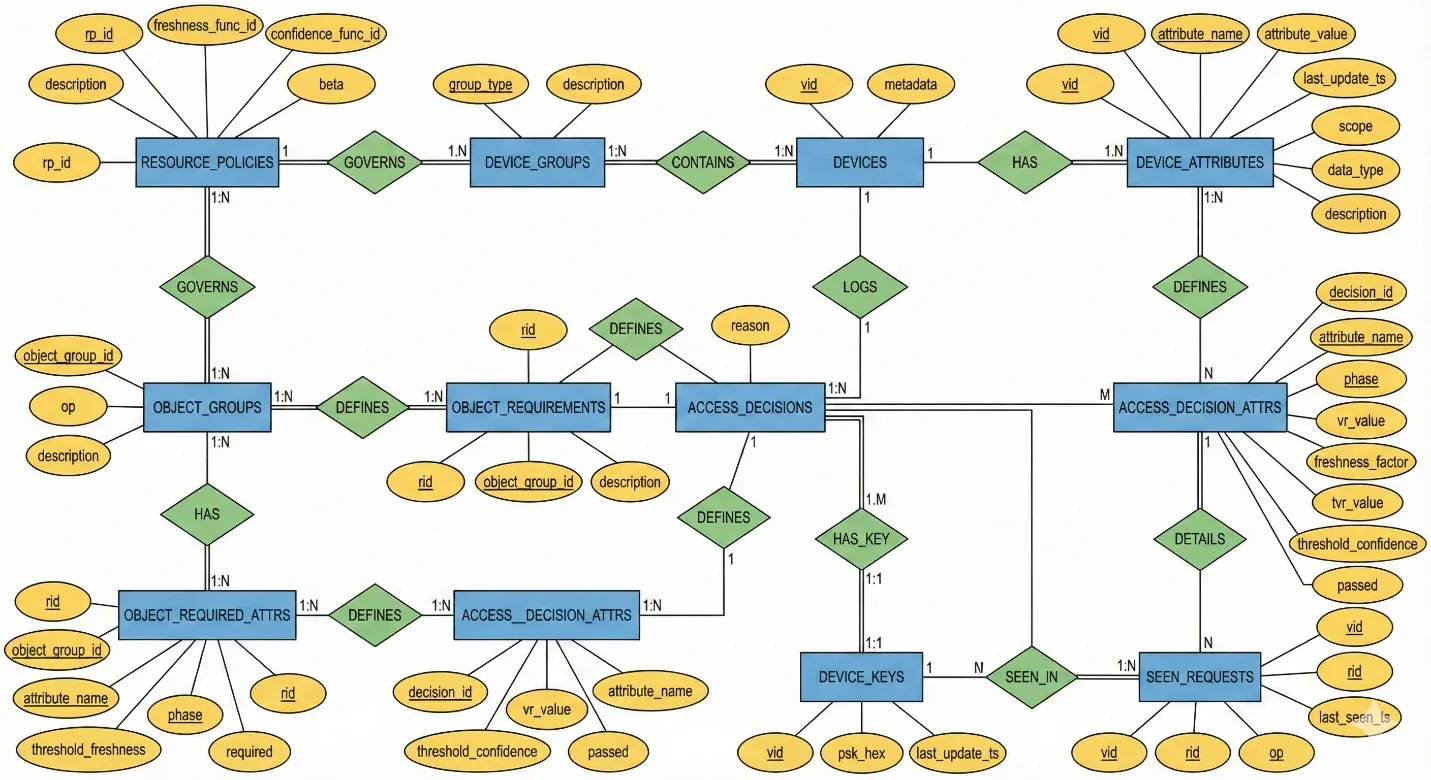
cloud_iam.db. It is the authoritative registry of devices, their pre-shared keys and their long-term attributes (trust score, location, firmware status). - Edge node. Terminates encrypted device traffic and runs the Local Authentication & Authorization (LAA) engine over a local policy and attribute store,
edge_laa.db. - IoT devices. Build requests from a device ID, a resource ID, an operation and a payload, then encrypt them to the edge.
A React admin console sits over both tiers. It handles device onboarding, PSK provisioning, triggering context sync and browsing both databases.
The channel
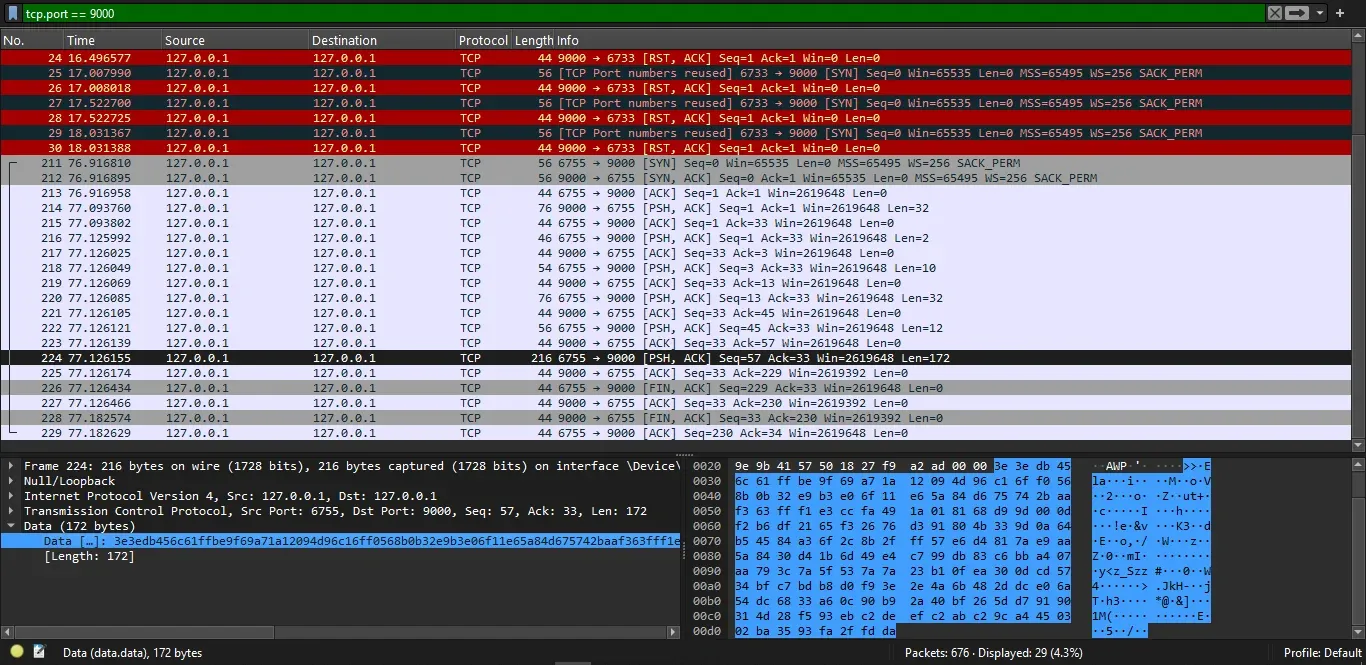
Each session, the edge and the device exchange ephemeral X25519 public keys. The shared secret goes through HKDF-SHA256, salted with the device’s PSK, to derive a 256-bit session key. The request is then sealed with ChaCha20-Poly1305 under a fresh nonce.
If the AEAD tag fails, the packet is dropped before any policy logic runs. The session key never crosses the wire.
The decision
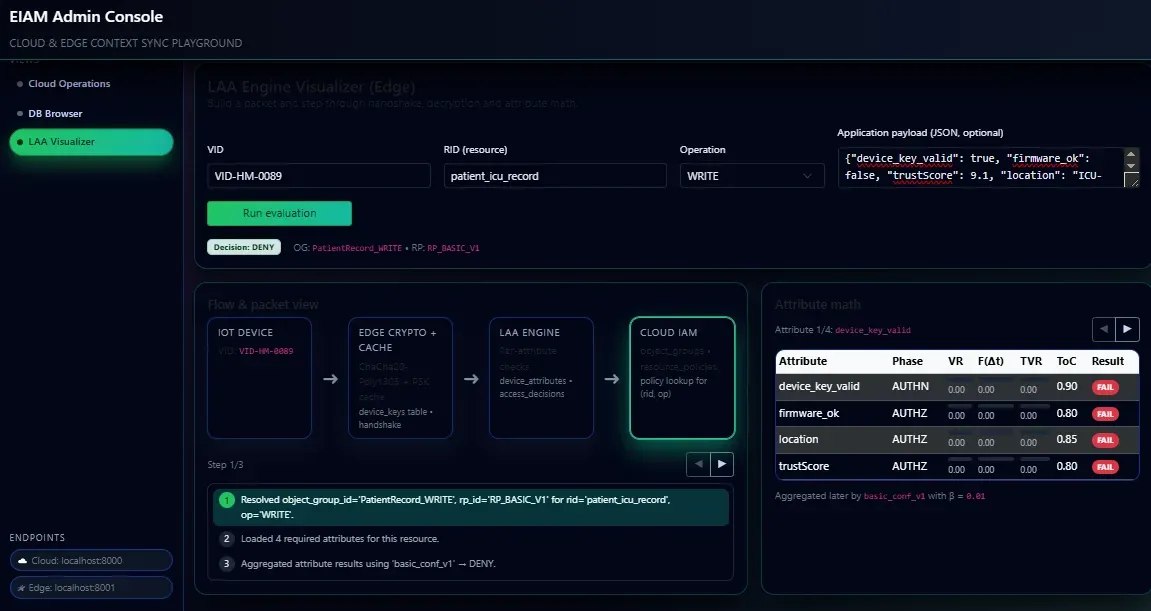
The LAA engine is attribute-based access control, with two extra questions asked of every attribute: how fresh is this, and how much do I trust it?
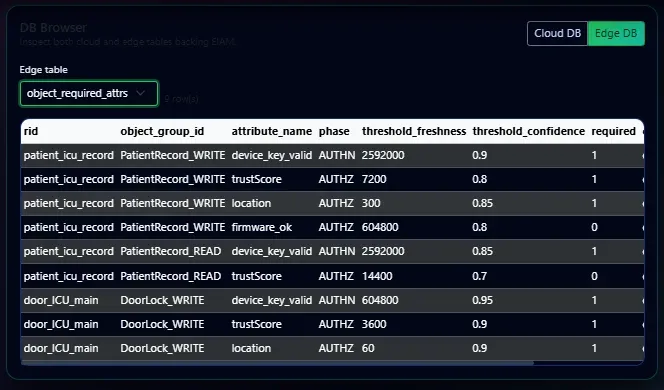
- The freshness factor is F = 1 while the attribute is younger than its threshold (ToF). After that it decays: F = e−β(Δt − ToF).
- The attribute’s trust value is TVR = VR × F, where VR is the reliability score of its value.
- An attribute passes if TVR ≥ ToC, its confidence threshold.
- A policy aggregator enforces least privilege: every required attribute must pass, and optional ones can only add confidence.
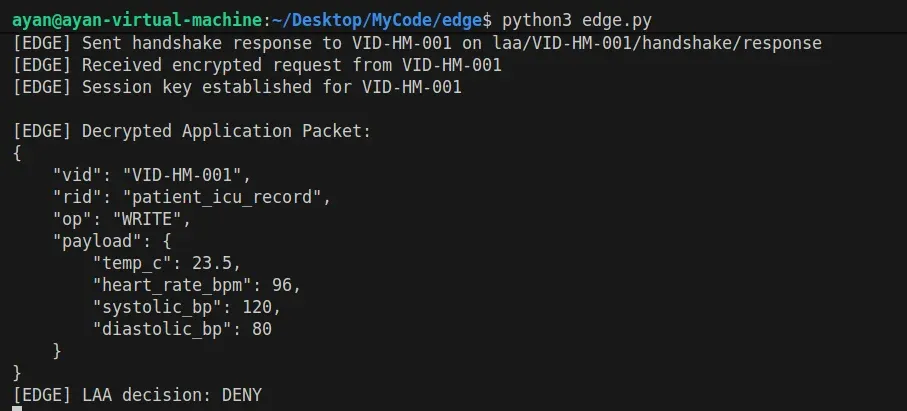
Every decision is written to an audit log, along with the per-attribute metrics that produced it.
Keeping the edge current
Context sync runs over MQTT as a request/response exchange with correlation IDs. The edge tells the cloud which devices it has seen and how recent its copy of each attribute is. The cloud returns only the attributes that are newer. Decisions stay local and fast, while attributes stay cloud-authoritative.
Architecture
Device
- IoT deviceVID · RID · OP · payload, ephemeral X25519 keypair
Channel
- AEAD sessionHKDF-SHA256 (PSK as salt) → ChaCha20-Poly1305, fresh nonce
Edge node
- Decrypt & verifybad tag → drop before policy
- LAA engineABAC · TVR = VR × F ≥ ToC
- Audit logevery decision + per-attribute metrics
Sync
- MQTT brokerrequest/response RPC with correlation IDs; attribute events
Cloud
- Cloud IAM (FastAPI)devices · PSKs · authoritative attributes
Evidence locker